
"land redistribution"
500 article(s) found

Nicaragua Coffee Bean Flavor Description High Temperature Brewing Method Step Diagram
Nicaragua Coffee Bean Flavor Description High Temperature Brewing Method Step Diagram Coffee production can be severely affected. The coffee industry in Nicaragua is no exception. The revolution of 1979 forced coffee growers to flee to Miami. There followed a period of uncertainty as the government considered whether to reallocate land (which included many plantations), resulting in a shortage of coffee supplies and a decline in production.

El Salvador's unique coffee varieties, flavor, coffee export advantages and coffee industry crisis story
The French Vado enjoys the world with some special varieties and specific local varieties: Bourbon, the bourbon abrupt change of Pacas, and the mixed pacasera (mentioned in Nicaragua, Pacamara, a mixture of Pacas and Maragogype, is a large coffee bean), allowing growers to pass through the biography that highlights the fruit itself.

The origin and planting environment of the rare Guadeloupe coffee beans
Professional coffee knowledge exchange more information about coffee beans please follow the coffee workshop (Wechat official account cafe_style) this archipelago in the Caribbean used to be an important producer of coffee. Good coffee production was affected by natural disasters. In 1789, more than 1 million coffee trees on 500 hectares of land produced 4000 tons. Today, only 150 hectares of land is used to grow coffee.

Introduction to the varieties of processing manor in the area of grinding scale of coffee beans in Guatemala
From 1871 to 1944, the country began to devote itself to economic modernization. At the same time, the United Fruit Company, which is dominated by the United States, has also begun to buy large coffee and banana estates in Guatemala and intervene in Guatemalan politics. After the revolution of October 1944, the former dictator was overthrown, Guatemala practised democracy and freedom of expression, and there were few places in the world that could provide products like those produced in Guatemala.
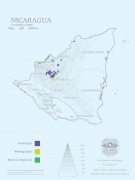
An introduction to the History of Nicaraguan Coffee
Nicaraguan coffee history introduces that Nicaragua began to grow coffee in the late 1800s, but it was not until the mid-19th century that it became an important export product. The increase in global demand for coffee (especially from North America) and the decline in supply in the Pacific islands have led to the steady development of the coffee market here. Around this time, the first batch appeared in the Managua region.

Nicaraguan Coffee planting History Ancient Tree Nicaraguan Coffee Bean producing area Flavor characteristics and taste
History Nicaragua began to grow coffee in the late 1800s, but it was not until the mid-19th century that the crop became an important export: increased global demand (especially from North America) and reduced supply from the Pacific islands led to the steady development of the coffee market here, around this period, the first large plantations appeared in Managua, throughout Jinotepe.

A brief introduction to the planting Market Price of Fine Coffee Bean varieties in Nicaragua's Heavenly Manor
When tasting Nicaraguan coffee, it is best to drink cold water first, so that you can better feel its mellow taste. Drink coffee while it is hot, because the tannins in Nicaraguan coffee are easy to change during cooling, and the taste becomes sour, which will affect the flavor of the coffee. You can add the right amount of sugar, and then add cream. Enjoy a cup of high quality Niga

Brief description of flavor, taste and aroma characteristics of Nicaraguan boutique coffee beans with citrus
Contrast: very delicate, clear, clear Nicaraguan coffee quality Nicaraguan coffee is in the forefront of coffee beans in the world and enjoys a good reputation. Its particles are moderate in size, mild in taste and very aromatic and mellow. Planted with volcanic ash and shaded trees, it produces high-quality Nicaraguan coffee with a mediocre, soft and slightly sour flavor. Nicaraguan coffee.

A brief introduction to the market price of Nicaraguan boutique coffee beans with exquisite aroma
Nepalese coffee cultivation and production has a unique environment, the spread of fertile volcanic ash soil, coupled with shade planting methods, to establish a good production quality, Nepalese coffee has a rich mellow and fragrant taste, moderate acidity and a good sense of balance of bitter taste, which is regarded as top grade in the eyes of international coffee experts. Because of the national character of the Latin American people, foreign buyers

Nicaragua Maracadura Coffee Bean Flavor Description Taste Manor Area Treatment Introduction
Nicaragua coffee beans In many countries, coffee production is severely affected for political reasons. The coffee industry in Nicaragua is no exception. The revolution of 1979 forced coffee growers to flee to Miami. There followed a period of uncertainty as the government considered whether to reallocate land (which included many plantations), resulting in a shortage of coffee supplies and a decline in production.

A brief introduction to the flavor, taste and aroma characteristics of Nicaraguan boutique coffee beans with mild taste
Planted with volcanic ash and shaded trees, it produces high-quality Nicaraguan coffee with a mediocre, soft and slightly sour flavor. Nicaraguan coffee is the largest of all coffee beans, while MADRIZ (Madriz) is located in the mountains of northern Nicaragua, adjacent to NuevaSegovia,Jinotega and Esteli, a quiet and elegant region known as the Somoto Gorge

A brief introduction to the market price of Nicaraguan boutique coffee beans with mild taste
Coffee is Nicaragua's main export. According to the president of the Nicaraguan Coffee Farmers' Federation, due to the poor harvest of coffee in Nicaragua's Pacific region, the country's total coffee production in 1998 may be 12% lower than that in 1997. In the coffee year of 1997 and 1998, Nicaragua harvested 1.422 million bags of coffee (each bag of 46kg), which has been producing 1% of coffee in the past 14 years.

A brief introduction to the planting market price of Nicaraguan boutique coffee beans with mellow taste
Nepalese coffee cultivation and production has a unique environment, the spread of fertile volcanic ash soil, coupled with shade planting methods, to establish a good production quality, Nepalese coffee has a rich mellow and fragrant taste, moderate acidity and a good sense of balance of bitter taste, which is regarded as top grade in the eyes of international coffee experts. Because of the national character of the Latin American people, foreign buyers

A brief introduction to the cultivation of exquisite fragrant Nicaraguan coffee beans, geographical location, climate and altitude
Nicaragua is one of the major coffee-producing countries, producing high-quality coffee. Even coffee from the Antigua Mountains of Guatemala, which is famous in Asia, imports raw beans from Nicaragua. Although Nicaraguan coffee is not famous in Asia, Nicaragua coffee is already famous all over the world (Starbucks has many cooperative coffee farmers in Nepal), while several coffee-producing countries in Central America

The Origin and Development of El Salvador Mount Wula what is the variety of El Salvador Wula Mountain Coffee beans
Professional coffee knowledge exchange more coffee bean information please follow the coffee workshop (Wechat official account cafe_style)

A brief introduction to the planting market price of Nicaraguan boutique coffee beans with moderate acidity
Coffee is Nicaragua's main export. According to the president of the Nicaraguan Coffee Farmers' Federation, due to the poor harvest of coffee in Nicaragua's Pacific region, the country's total coffee production in 1998 may be 12% lower than that in 1997. In the coffee year of 1997 and 1998, Nicaragua harvested 1.422 million bags of coffee (each bag of 46kg), which has been producing 1% of coffee in the past 14 years.

A brief introduction to the treatment method of grinding degree and baking degree of Nicaraguan boutique coffee beans with citrus
Nicaragua is now one of the poorest countries in Central America. Due to its poor economic foundation, the coffee industry is still relatively backward, while coffee farmers are in extreme poverty. Fortunately, Nicaraguan coffee has received some foreign aid funds to improve the quality of its coffee. Coffee from Madagelba, Sinodega and Segovia in Nicaragua

A brief introduction to the origin, development, history and culture of Nicaraguan boutique coffee beans with mellow taste
Coffee is Nicaragua's main export. According to the president of the Nicaraguan Coffee Farmers' Federation, due to the poor harvest of coffee in Nicaragua's Pacific region, the country's total coffee production in 1998 may be 12% lower than that in 1997. In the coffee year of 1997 and 1998, Nicaragua harvested 1.422 million bags of coffee (each bag of 46kg), which has been producing 1% of coffee in the past 14 years.

Slippery and meticulous Happy Manor Fine Coffee Bean cultivation Geographic location, Climate and altitude
Nicaragua is now one of the poorest countries in Central America. Due to its poor economic foundation, the coffee industry is still relatively backward, while coffee farmers are in extreme poverty. Fortunately, Nicaraguan coffee has received some foreign aid funds to improve the quality of its coffee. Coffee from Madagelba, Sinodega and Segovia in Nicaragua

Brief introduction of planting situation, geographical location, climate and altitude of Nicaraguan boutique coffee beans with mild taste
When tasting Nicaraguan coffee, it is best to drink cold water first, so that you can better feel its mellow taste. Drink coffee while it is hot, because the tannins in Nicaraguan coffee are easy to change during cooling, and the taste becomes sour, which will affect the flavor of the coffee. You can add the right amount of sugar, and then add cream. Enjoy a cup of high quality Niga